

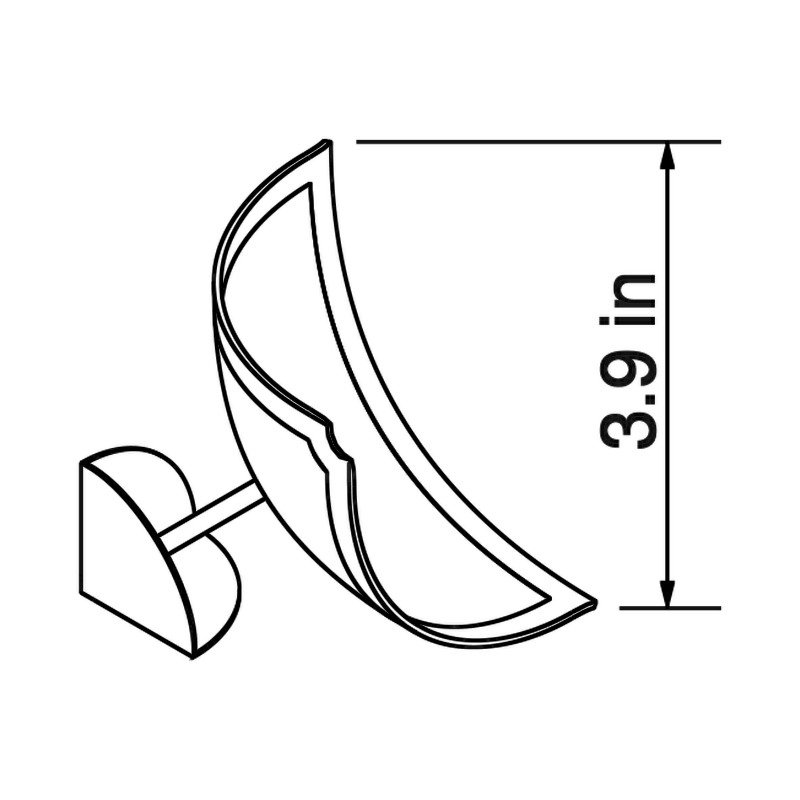

CoR 4 S 3-Way Internal Corner
CoR 4 S 3-Way Internal Corner: Pre-formed cove base corner where three CoR 4 runs meet, with flexible edges, in the CoRound™ Seal line. Pre-formed corners, no silicone-filled field cuts.
Colors: Pure White 9010, Sand White 9002.
No sealant line required along the wall
Pre-formed corners, no silicone-filled field cuts
No resin or cement to cure
No welding on site
Full Description
The cove base that goes in with the panels. The CoR 4 S 3-Way Internal Corner is the cove base corner of the CoRound Seal line where three CoR 4 runs meet, at the top of the room. It has flexible edges. Because it arrives pre-formed, the corner needs no field cuts.
What Is the CoR 4 S 3-Way Internal Corner?
It is a pre-formed inside corner where three CoR 4 runs meet, with flexible edges. The CoR 4, the cove base for wall-to-wall and wall-to-ceiling junctions, snaps onto the pre-drilled CoR 4 Base. Specifically, this corner closes the point where the wall-to-wall junction reaches the ceiling.
CoRound Basic for cost-sensitive projects; CoRound Seal adds corner pieces and end caps with flexible lips. This corner is one of those pieces, so it belongs to the Seal line only. In the Basic line, the CoR 4 B 3-Way Internal Corner, in rigid PVC, goes in the same position. Seal Cap: A cap that covers the fastener holes on the Seal components, so the holes are not left open to collect dirt. Included with the Seal components; also available separately.
Why Use a Pre-formed Cove Base Corner Instead of Field Cuts?
At the top of a room, three runs meet at one point, while installers often work there from a ladder. When cut by hand, that corner becomes a field cut that can end up filled with silicone. Instead, this cove base corner comes ready from the factory: pre-formed corners, no silicone-filled field cuts. The curve comes from the factory, not from the installer’s hand: it is the same all the way around the room.
Where Does This Cove Base Corner Install?
It goes at each top inside corner, where the wall-to-ceiling junction meets the wall-to-wall junction. Typical rooms include:
- Walk-in coolers built with insulated panels
- Processing and packing rooms in food plants
- Commercial kitchens
At the floor of the same corner, the CoR Skirt S 3-Way Internal Corner closes the foot of the wall-to-wall junction. It is one of the sanitary cove base accessories with flexible edges, like this corner.
How Do You Install the CoR 4 S 3-Way Internal Corner?
First, at the top of the wall, install only the mounting base for the CoR 4 S 3-Way Internal Corner. Then install the ceiling run. Fasten the CoR 4 Base profile to the ceiling with screws or rivets, then snap the CoR 4 onto it. Finally, snap the CoR 4 S 3-Way Internal Corner into place. Silicone is optional: not required for installation.
If a corner piece or end cap leaves a gap, it is not fully seated: tap it into place with a rubber mallet. These instructions are general installation advice: the installer chooses the method that suits the job.
Order the CoR 4 S 3-Way Internal Corner
Panelmart supplies this cove base corner and the other sanitary cove base accessories of the Seal line, so the corners of the room come from one system. Browse the CoRound Seal System or all sanitary PVC profiles. Available by the box or by the piece.
Get a quote, specs or free samples for the CoR 4 S 3-Way Internal Corner: call +1 786 917 8106, email [email protected], or contact Panelmart today. Our technical team usually responds within one business day.
Video Gallery
Why Choose CoRound
The cove base that goes in with the panels. Rigid PVC profiles with flexible co-extruded lips and pre-formed corners. Designed for walk-in coolers, food plants and commercial kitchens.
Flexible lip
On standard cold storage panels with mesa or wide-rib profiles, the flexible lip follows the ribs.
Factory-formed curve
The curve comes from the factory, not from the installer’s hand: it is the same all the way around the room.
One pass along the wall
Installing CoRound is one pass along the wall: fasten the profile and snap in the corners. There is nothing to mix, trowel, weld or cure, and no sealant line is required along the wall.
Sanitary design
The rounded profile removes the square corner where dirt builds up, and the smooth, non-porous surface is easy to clean.
Replaceable lengths
A damaged length can be replaced on its own: the rest of the run stays in place. The first CoRound installations date back to 2010.
Temperature
Operating temperature: −4 °F to +140 °F. For colder applications, contact us.
Technical Specs
Technical data for this piece. Available by the box or by the piece.
| Material | PVC with flexible edges |
| Profile Height | 3.9 in |
| Packing | 100 pcs/box |
| Operating temperature | −4 °F to +140 °F. For colder applications, contact us. |
| Color Options | Pure White 9010, Sand White 9002 |
| Chemical Resistance | Resistant to common cleaning chemicals |
Applications
Designed for walk-in coolers, food plants and commercial kitchens.
Cold Storage
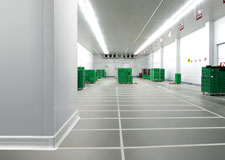
PVC is a thermal-break material: it conducts far less heat than metal.
✓ Walk-in coolers
✓ Freezers
✓ Refrigerated warehouses

Food Processing
Resistant to common cleaning chemicals; can be washed with water up to +140 °F.
✓ Meat
✓ Dairy
✓ Bakery
✓ Beverage production

Cleanrooms and Labs
Applications also include cleanrooms and pharmaceutical facilities.
✓ Cleanrooms
✓ Laboratories
✓ Pharmaceutical facilities

Commercial Kitchens
In a room already in operation, CoRound can be installed on the finished floor: there is no floor to redo and nothing to cure.
✓ Restaurants
✓ Commissaries
✓ Food service
Installation Positions

Wall-to-Ceiling Junction
Wall-to-Wall Junction
Frequently Asked Questions
What exactly are sanitary PVC profiles?
Sanitary PVC profiles, also called sanitary cove base, round off the corner where two surfaces meet: floor and wall, wall and wall, or wall and ceiling. The rounded profile removes the square corner where dirt builds up, and the smooth, non-porous surface is easy to clean. CoRound profiles are precision-extruded from rigid PVC, with flexible co-extruded lips on the cove base and the sanitary base.
Why not just use traditional silicone sealant for corner junctions?
Exposed sealant can need cleaning and, over time, redoing: each time that means a service call, material and labor. With CoRound, no sealant line is required along the wall. The system has pre-formed corners, no silicone-filled field cuts. Silicone is optional: not required for installation.
Where are CoRound profiles used?
Applications include walk-in coolers and freezers, food plants, commercial kitchens, cleanrooms and pharmaceutical facilities. Installs on insulated panels, FRP-covered walls, tile, masonry and drywall. PVC is a thermal-break material: it conducts far less heat than metal.
Can CoRound profiles be used in walk-in coolers and freezers?
Walk-in coolers and freezers are among the applications of CoRound profiles. Operating temperature: −4 °F to +140 °F. For colder applications, contact us.
How do sanitary PVC profiles compare with tile or metal bases?
A tile cove base has grout lines, and grout can hold dirt and moisture. CoRound profiles have a smooth PVC surface with no grout lines. Metal bases and channels can rust where water sits. PVC does not rust. CoRound costs less than stainless steel.
What’s the difference between a standard baseboard and a sanitary profile like CoR Skirt?
The CoR Skirt is a rigid PVC sanitary base with a rounded profile and flexible co-extruded lips. Unlike a rubber base, it can be screwed or riveted to the wall, so it doesn’t have to depend on adhesive. When the CoR Skirt is screwed or riveted, the fasteners sit behind a snap-on cover strip: no exposed screw heads to collect dirt.
How do the flexible lips work?
- CoR Skirt sanitary base: Flexible co-extruded lips press against the wall and the floor and follow small surface irregularities, closing the juncture. In wet areas, installers can add a thin bead of neutral silicone to help keep water from getting behind the profile.
- CoR 4 cove base: Flexible co-extruded lips press against both walls, or the wall and the ceiling, and follow small surface irregularities, closing the junction.
On standard cold storage panels with mesa or wide-rib profiles, the flexible lip follows the ribs. Silicone is optional: not required for installation.
Is installation complicated? Do I need a specialized technician?
The panel crew can install the profiles: no separate flooring or welding crew to schedule.
The CoR Skirt is screwed or riveted to the wall, or bonded with adhesive: installer’s choice. The CoR 4 snaps onto the CoR 4 Base, which is pre-drilled and fastened with screws or rivets. Corners, joints and end caps press or snap into place.
Do I need to purchase special accessory pieces for corners and junctions?
Yes, and that’s one of the strengths of a complete system like CoRound. One system for the whole room: base track, sanitary base or heavy-duty curb, cove base for wall and ceiling junctions, pre-formed corners, end caps and corner guards, all made to fit together. CoRound Basic for cost-sensitive projects; CoRound Seal adds corner pieces and end caps with flexible lips.
What maintenance do CoRound profiles need?
Resistant to common cleaning chemicals; can be washed with water up to +140 °F. PVC does not rust. The first CoRound installations date back to 2010.
Related Products

CoR 4
Cove base for wall-to-wall and wall-to-ceiling junctions. Snaps onto the CoR 4 Base.

CoR 4 Base
Pre-drilled support profile for the CoR 4.

CoR 4 End
End cap that closes a CoR 4 run.

CoR 4 Joint
Joint piece that connects two CoR 4 lengths in a straight run.

CoR 4 2-Way External Corner
Pre-formed outside corner for the CoR 4.
Call
+1 786 917 8106 (phone and WhatsApp)
Address
13230 SW 132nd Avenue, Unit B4, Miami, FL 33186 · Mon–Fri 8am–5pm ET