By The Panelmart Engineering Team | Fact-Checked & Updated: April 2026 What Does cGMP Require For Floor-to-Wall Junctures in Pharmaceutical Manufacturing Facilities? Quick Answer: To meet strict FDA regulations, pharmaceutical and food manufacturing facilities…
Pharma Solutions
Panelmart’s pharmaceutical cove base category centralizes the regulatory and validation resources that pharmaceutical manufacturers, sterile compounding facilities, and FDA-inspected drug production plants need. The articles below cover what 21 CFR Part 211, FDA cGMP audits, and USP standards actually require at the floor-to-wall juncture — and how rigid PVC sanitary cove base satisfies the specification with documented, repeatable geometry.
What FDA cGMP Requires for Pharmaceutical Facilities
FDA Current Good Manufacturing Practice (cGMP) regulations under 21 CFR Part 211 require pharmaceutical manufacturing facilities to maintain surfaces that are smooth, easily cleanable, and free of cracks or crevices that could harbor contamination. Therefore, every floor-to-wall juncture in a pharmaceutical facility becomes a documented Critical Quality Attribute. Furthermore, FDA inspectors verify the radius geometry, the seal integrity, and the cleanability of each juncture during cGMP audits. As a result, a cGMP compliant cove base is no longer just a specification choice — it’s a regulatory checkpoint that drives validation outcomes. The articles below explain how rigid PVC sanitary cove base satisfies cGMP geometry requirements while supporting the documentation needs of pharmaceutical QA programs. For a foundational primer on the system, read our overview of rigid PVC sanitary cove base. For the regulatory deep-dive, our guide on achieving a cGMP-compliant radius profile walks through the geometry that pharmaceutical inspectors verify.
Why Validation and Documentation Drive Pharma Specifications
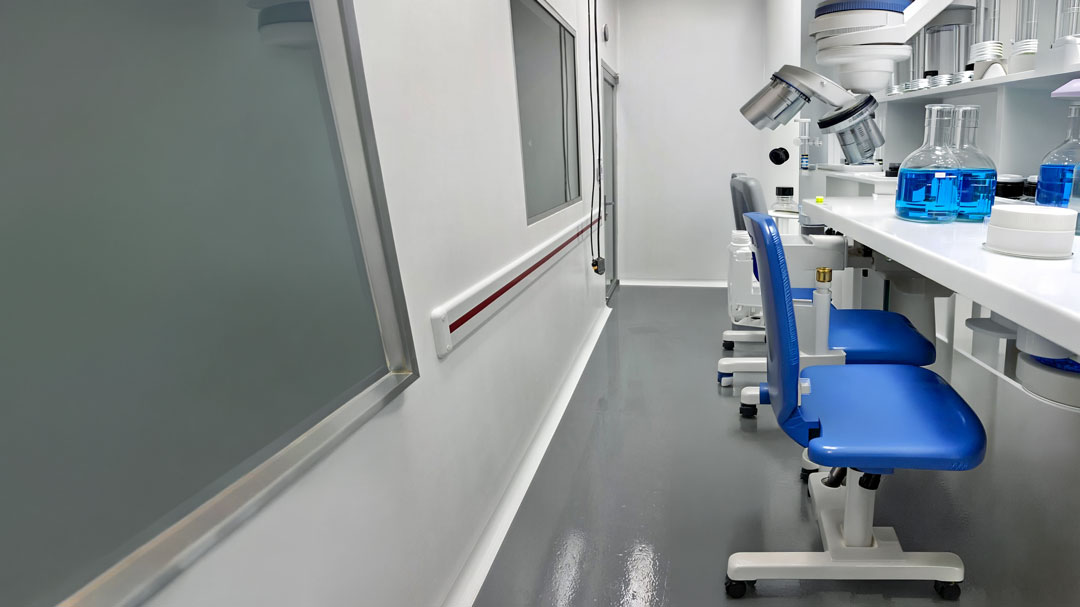
Pharmaceutical specifiers think differently than food facility specifiers. In a food plant, the inspector verifies the surface today. In a pharma plant, the QA team must document that every batch produced over the facility’s operational lifetime came from an environment with validated, controlled surfaces. Consequently, pharmaceutical sanitary base specifications prioritize four characteristics: documented material composition, repeatable installation geometry, traceable batch records, and stability through repeated VHP and chemical sterilization cycles. Mechanically fastened rigid PVC satisfies all four. Equally important, the absence of silicone, adhesives, and curing agents eliminates the variable contamination sources that complicate validation protocols. Our analysis of the cleanroom coving system documents how the 21 CFR Part 211 coving solution performs across pharmaceutical manufacturing, sterile compounding, and laboratory environments.
What Pharmaceutical Engineers Look For
Pharmaceutical engineers and validation specialists evaluate cove base systems against four criteria. First, full material traceability — Calcium-Zinc PVC formulation with documented composition, no heavy metal stabilizers. Second, installation method that produces consistent, validated geometry across every linear foot. Third, compatibility with VHP, peracetic acid, and standard pharmaceutical decontamination protocols. Fourth, a permanent waterproof seal that survives the operational lifetime of the facility without re-installation, re-validation, or warranty callbacks.
- Curved 4-inch profile with documented radius geometry for cGMP audit traceability
- Mechanically fastened — no silicone, no adhesive, no batch-to-batch curing variability
- Compatible with VHP, peracetic acid, and standard pharmaceutical sterilization protocols
- Calcium-Zinc PVC formulation — no heavy metal stabilizers, documented material composition
- Permanent waterproof seal supporting pharmaceutical wall protection over the facility lifetime
Explore the articles below for technical guides on cGMP compliance and pharmaceutical sanitary base specification. Or contact Panelmart for a project-specific spec. WhatsApp: +1 786 917 8106.
{
“@context”: “https://schema.org”,
“@type”: “FAQPage”,
“mainEntity”: [
{
“@type”: “Question”,
“name”: “What does FDA cGMP 21 CFR Part 211 require for pharmaceutical floor-to-wall junctures?”,
“acceptedAnswer”: {
“@type”: “Answer”,
“text”: “FDA cGMP regulations under 21 CFR Part 211 require pharmaceutical manufacturing surfaces to be smooth, easily cleanable, and free of cracks or crevices that could harbor contamination. The floor-to-wall juncture must form a continuous, sealed, radiused surface that supports validated cleaning protocols. Rigid PVC sanitary cove base — mechanically fastened, with a curved 4-inch profile that exceeds the FDA Food Code 3/8-inch minimum radius — meets this geometry requirement.”
}
},
{
“@type”: “Question”,
“name”: “Is rigid PVC cove base suitable for cGMP-validated pharmaceutical facilities?”,
“acceptedAnswer”: {
“@type”: “Answer”,
“text”: “Yes. CoRound’s rigid PVC sanitary cove base uses a Calcium-Zinc stabilized formulation with documented material composition and installs mechanically — without silicone, adhesives, or curing agents. This eliminates the batch-to-batch variability and contamination sources that complicate pharmaceutical validation protocols, supporting cGMP-compliant facility qualification.”
}
},
{
“@type”: “Question”,
“name”: “Can pharmaceutical sanitary base survive VHP and peracetic acid sterilization?”,
“acceptedAnswer”: {
“@type”: “Answer”,
“text”: “Yes. CoRound’s rigid PVC sanitary cove base is compatible with vaporized hydrogen peroxide (VHP), peracetic acid, and standard pharmaceutical chemical decontamination protocols. The mechanically fastened seal does not degrade under repeated sterilization cycles, supporting long-term pharmaceutical wall protection without re-installation or re-validation.”
}
}
]
}
Zero Compromises: The Ultimate Sanitary Profile System for Cleanrooms and Laboratories
By The Panelmart Engineering Team | Fact-Checked & Updated: April 2026 Why Does Epoxy Cove Base Fail in Cleanroom Environments? Quick Answer: A cleanroom sanitary cove base must prevent particle accumulation and withstand harsh chemical sterilants. Traditional…