

By The Panelmart Engineering Team | Fact-Checked & Updated: April 2026
Do Sanitary Baseboards Need to Be NSF Certified for a Health Inspection?
If you are a general contractor outfitting a new restaurant or food processing plant, you constantly field certification questions from clients. One of the most common is: “Are your baseboards NSF certified?” This question is based on a fundamental misunderstanding of how food facility regulations actually work. In fact, many contractors overpay for architectural materials because they confuse private equipment certifications with federal building codes. This article clears up the difference.
Do NSF Certified Baseboards Actually Exist?
No. To understand why, you first need to understand what NSF International actually does. NSF is a private, independent organization. It tests and certifies products that directly contact food or drinking water. For example, a commercial ice machine, a prep sink, or a stainless steel cutting table all require NSF certification. Inspectors classify these as food contact equipment.
A baseboard, however, is an architectural building material. Nobody prepares food on floor trim. Because a sanitary cove base never directly touches food, the concept of NSF certified baseboards is simply a marketing myth. In other words, it is not a requirement that any health inspector will ever enforce. Chasing this certification wastes both your budget and your time.
What Does the FDA Food Code Actually Require for Baseboards?
When a local health department inspects your facility, they reference the FDA Food Code — specifically section 6-201.13. See our full guide on FDA Food Code 6-201.13 for the complete regulatory breakdown. This is the federal master document that all state and county regulators use to evaluate physical facility construction. It requires that floor and wall junctures be coved and sealed to create an easily cleanable surface.
In practice, the 90-degree corner where the wall meets the floor must be replaced with a smooth, concave curve. The minimum radius is 3/8 of an inch. As a result, mops, brushes, and pressure washers can clean the junction in a single, continuous pass. There are consequently no corners for grease or bacteria to hide in. For state-level enforcement in Texas, see our guide on TFER cove base requirements. For Florida, see our guide on Florida DBPR plan review.
How Does a PVC Sanitary Cove Base Satisfy the FDA Food Code?
You do not need a private certification label. Instead, you need structural engineering that satisfies the inspector’s measuring tools. That is precisely why Globe Panels developed the CoRound system, distributed nationwide by Panelmart. It addresses every point of FDA Food Code 6-201.13 through three engineered features:
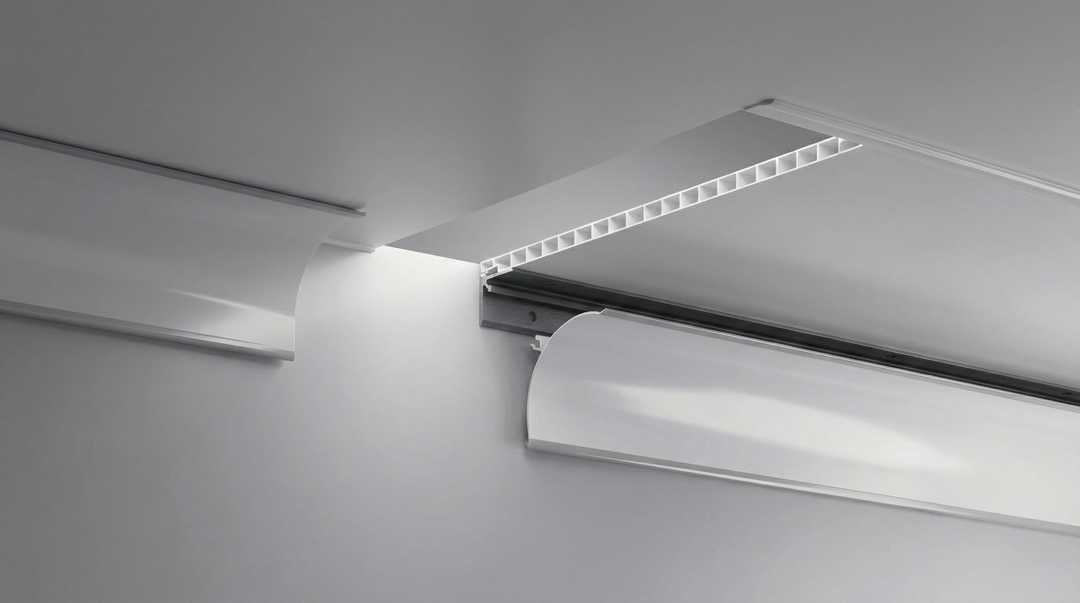
- Mathematically perfect coved radius: CoRound profiles feature a sweeping curve that exceeds the FDA Food Code 3/8-inch minimum radius requirement. Therefore, your facility mathematically meets the “coved” definition of the health code on day one.
- Silicone-free hermetic seal: The profile features co-extruded flexible sealing lips. When mechanically fastened, they compress against your FRP wall panels, creating a permanent, watertight seal. Consequently, this eliminates the mold-prone silicone caulk that traditional baseboards rely on.
- Pre-formed snap-fit corners: Panelmart supplies injection-molded internal and external corners. Installers simply snap them into place with no cutting and no guesswork. As a result, the zero-gap corner that the FDA code requires comes standard, without adding specialized labor to your budget. See our guide on cove base installation labor costs and pre-formed corners.
The same CoRound system is available in a cold storage rated version for refrigerated rooms and as a USDA compliant cove base for meat and poultry plants. See our dedicated USDA cove base guide for full specifications.
What Is the Real Cost Difference Between NSF Certification and FDA Compliance?
Products that carry NSF certification pass the cost of private third-party testing on to the buyer. The CoRound system, however, is different. It meets the only standard that actually governs your facility — the FDA Food Code — through precision engineering rather than a private label. Furthermore, you get a system that passes every health inspection in all 50 states. The cost is a fraction of chasing certifications that no inspector will ever require for architectural building materials. For a full breakdown of long-term savings, see our guide on total cost of ownership and warranty callbacks.
Ready to Build to the Code and Stop Overpaying?
In summary, stop wasting your budget on non-existent architectural certifications. Globe Panels engineered the CoRound PVC sanitary cove base system to meet the strict requirements of the FDA Food Code — and nothing more than that is necessary. Panelmart stocks the complete system and ships directly to your job site anywhere in the United States. Contact Panelmart today to equip your next project and pass your health inspections with confidence.