

This guide looks at the total installed cost of a panel job: what it includes beyond the panel price, and how to compare two quotes. Panelmart supplies GlobeWall insulated panels and the CoRound™ system: the cove base that goes in with the panels. No sealant line required along the wall. Pre-formed corners, no silicone-filled field cuts. No resin or cement to cure.
By Panelmart · Updated: October 2026
Why Is the Panel Price Only Part of the Total Installed Cost?
To begin with, a quote usually starts with the insulated metal panel cost per square foot. Yet the room is not ready until the crew has set the panels and closed the junctions.
In between, however, labor, equipment and waste all add to that figure. So two quotes with the same panel price can lead to different totals.
What Makes Up the Total Installed Cost?
In general, for a panel job, the total installed cost has five parts:
- Material: the panels, the base track, the cove base and the pieces that go with them.
- Labor: the hours the crew needs to set the panels and finish the junctions.
- Equipment: the lifts and other machines on site, for as long as the job lasts.
- Waste: off-cuts and panels that the crew cannot use.
- Finishing: the work at the junctions and, with some systems, a separate trade for the cove base.
The CoRound Channel is a U-shaped PVC base track that seats the base of the insulated panels in walk-in coolers and freezers and in food plants. It takes the place of a metal U-channel or angle.
The channel seats the base of the insulated panels; tall panels still need to be braced until they are fastened. Operating temperature: −4 °F to +140 °F. For colder applications, contact us.
How Do Symmetrical Panels Affect the Total Installed Cost?
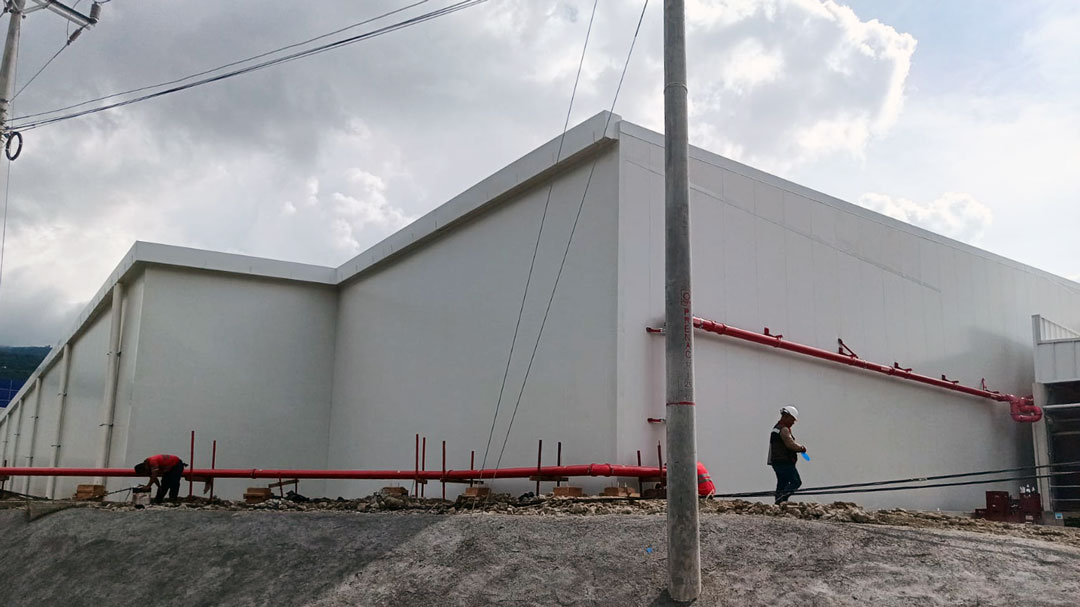
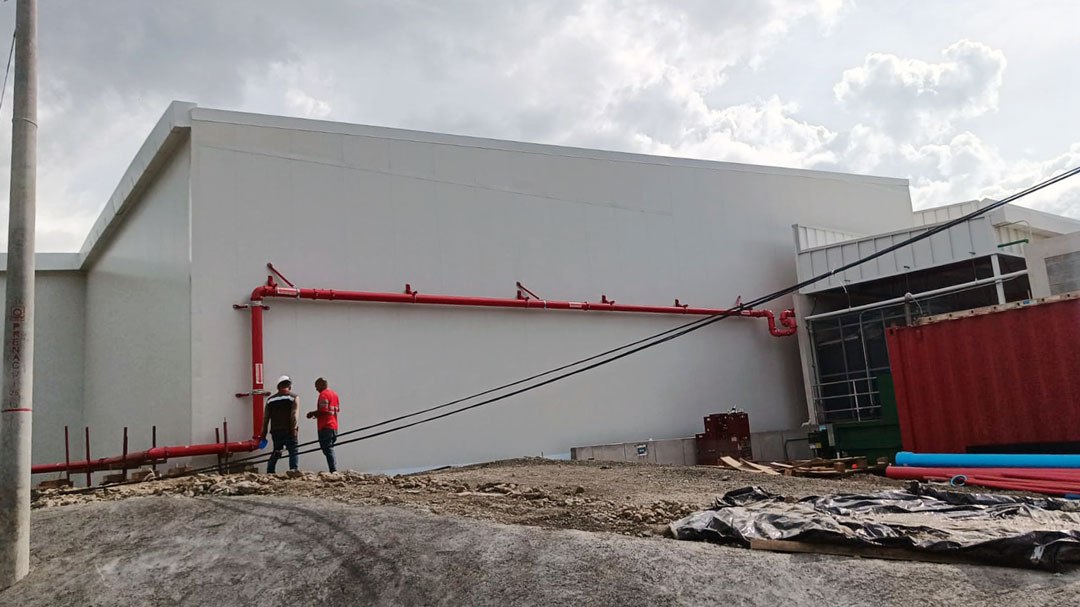
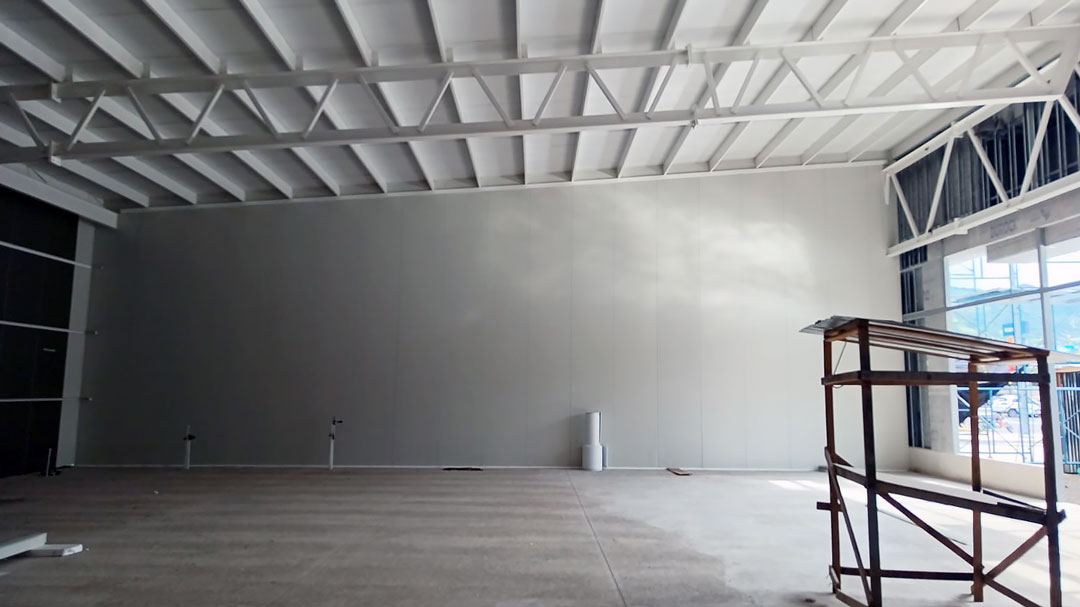
Orientation and off-cuts, in particular, are where the panel itself can make a difference. GlobeWall panels are symmetrical and reversible: either face can go toward the room, and off-cuts can be flipped and reused.
So the crew does not need to sort the panels by face before each lift. However, both faces are made in the same RAL color. Coils from different production batches can show slight shade differences, so on large visible walls keep the same face toward the room.
Except on large visible walls, off-cuts from angled cuts can go on the other side of a gable, too, so fewer of them can end up as waste. As for the joints: tongue-and-groove joints that fit together easily.
For more on GlobeWall, also see our guide to symmetrical insulated panels.
Who Finishes the Junctions?
At the junctions, the rounded profile removes the square corner where dirt builds up, and the smooth, non-porous surface is easy to clean.
With a troweled cove, however, a flooring crew usually comes in after the panels, and the resin needs time to cure.
Instead, the panel crew can install the profiles: no separate flooring or welding crew to schedule. Installing CoRound is one pass along the wall: fasten the profile and snap in the corners. There is nothing to mix, trowel, weld or cure, and no sealant line is required along the wall.
For more, read our guide to skipping the flooring subcontractor.
What Does the Cove Base Cost After the Installation?
Later on, exposed sealant can need cleaning and, over time, redoing: each time that means a service call, material and labor. With CoRound, no sealant line is required along the wall.
Also, a damaged length can be replaced on its own: the rest of the run stays in place. For the long run, read our guide to the total cost of ownership of a cove base.
Why Does a Single Supplier Help?
When panels and cove base come from one supplier, there is one quote, one order and one contact for both parts of the room.
We serve contractors, facility managers and builders who need insulated panels, sanitary cove base systems and sanitary wall profiles for cold storage, food processing and commercial kitchen projects.
Our technical team also helps you choose the right pieces for the job.
How Do You Compare the Total Installed Cost of Two Quotes?
First, check what each quote includes: panels, base track, cove base, corner pieces and delivery.
Then compare the work each system needs on site. For example, ask who installs the cove base, and whether anything has to cure.
Why Choose Panelmart for a Panel Job?
- Complete systems from one source: GlobeWall panels and the CoRound system.
- Cut-to-size panels: sized for your project.
- No resin or cement to cure: there is nothing to mix, trowel, weld or cure.
- Nationwide delivery: across the US.
The CoRound system — stocked in the US by Panelmart. Browse all sanitary PVC profiles.
Frequently Asked Questions
Does Panelmart sell the panels and the cove base together?
Yes. Panelmart sells GlobeWall insulated panels and the CoRound system, so the panels and the cove base come from one supplier.
Can the same crew install the panels and the cove base?
Yes. The panel crew can install the profiles: no separate flooring or welding crew to schedule.
How do I get a quote for a full room?
Send us the panel sizes and the list of profiles and pieces you need. Then we’ll send you one quote for both.
How Do I Get a Quote, Specs or Free Samples?
Call or message us at +1 786 917 8106 (phone and WhatsApp), or email [email protected]. Our technical team usually responds within one business day. Contact Panelmart today for a quote, specs or free samples.